Why are cover blocks important?
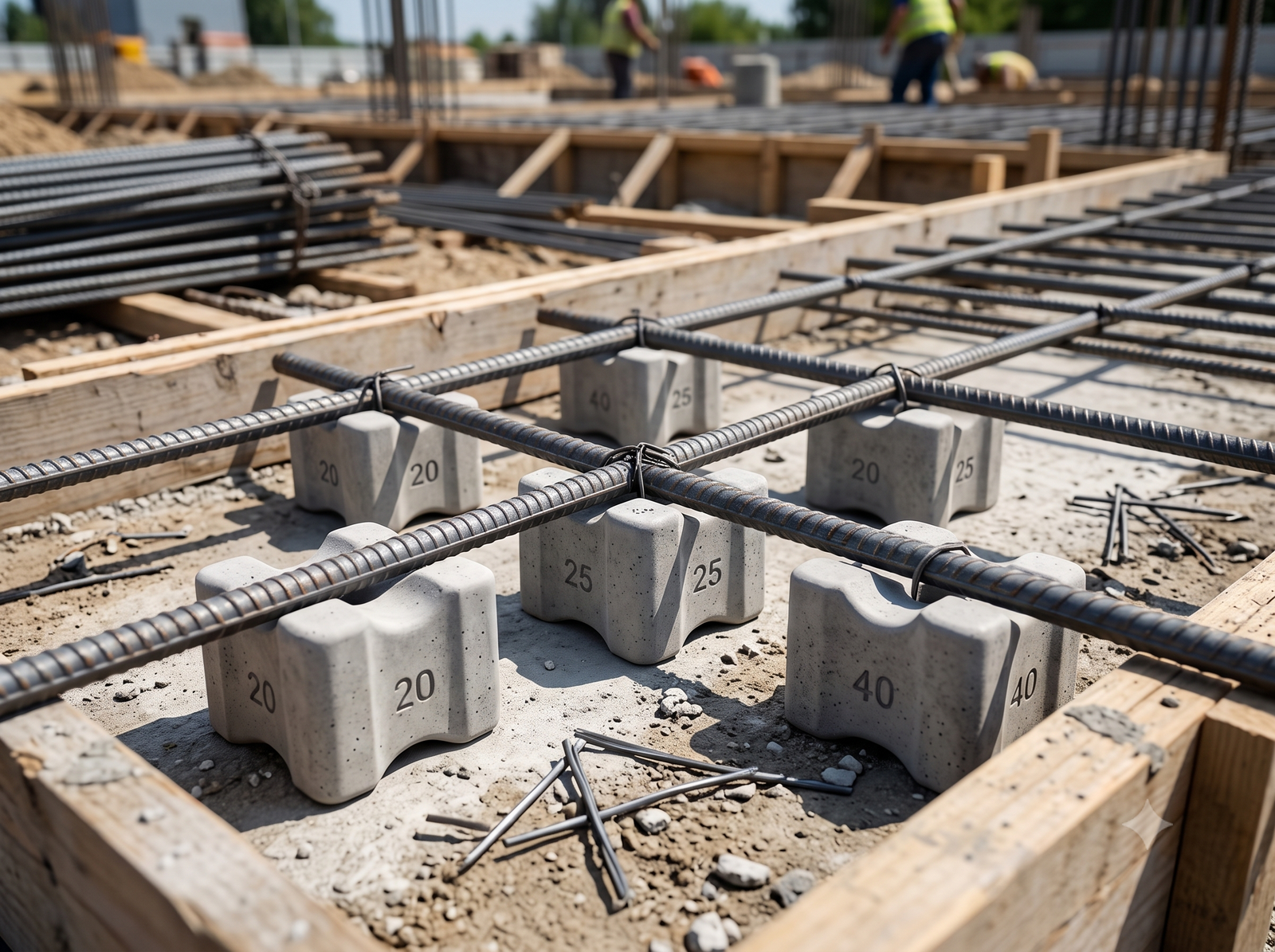
Cover blocks maintain a specific, required distance between steel reinforcement (rebar) and the concrete surface. This crucial gap protects the steel from environmental corrosion, ensures proper structural bonding, and provides fire resistance.
Cover Block Uses
Maintaining Specified Rebar Distance
The primary function of a cover block is to maintain a precise, specified distance between the reinforcement bars (rebar) and the formwork (shuttering). This gap, known as the ‘clear cover’, is crucial.
Prevents rebar from touching formwork.
Ensures concrete completely encases the steel.
Guarantees structural load distribution as designed.
Environmental Protection
Exposed rebar rusts rapidly, leading to concrete spalling and structural failure. Adequate cover protects steel from moisture, corrosive elements, and atmospheric oxygen.
Fire Resistance Rating
Concrete acts as an insulator for the steel reinforcement during a fire. Without adequate cover provided by blocks, the steel would rapidly reach yield temperature, causing immediate structural collapse.
Thermal Insulation
Steel is highly conductive. Concrete cover blocks ensure a buffer layer of concrete that insulates the reinforcement from extreme temperature fluctuations, preventing thermal expansion issues that can crack the surrounding concrete structure.
The Cost of Skipping Cover Blocks
Attempting to save minor costs by neglecting cover blocks or using improper substitutes (like stones or wooden pieces) inevitably leads to catastrophic structural issues down the line.
Concrete Spalling
Rusting rebar expands up to 7 times its volume, blowing off the concrete cover.
Reduced Load Capacity
Improperly positioned rebar drastically alters the calculated load-bearing capacity of beams and columns.
PVC Rubber Mould vs Standard Plastic Mould
| Feature | PVC Rubber Moulds (Jyoti Enterprise) | Standard Plastic Moulds |
|---|---|---|
| Material Flexibility | Soft, flexible, and elastic | Hard, rigid, and brittle |
| Lifespan & Durability | 4+ years (resists cracking & warping) | Short lifespan (cracks under pressure) |
| Demoulding Process | Extremely easy (instant release) | Difficult (requires hammering, causes damage) |
| Concrete Strength & Finish | High gloss shine, zero chipped edges | Rough surface, prone to edge chipping |
| Environmental Impact | 100% Recyclable (sustainable production) | Hard to recycle; high waste generation |